
FSSAI Registration in India: Complete Guide to Food License, Registration Process, Documents, Fees & Compliance (2026)
Learn everything about FSSAI Registration in India, including eligibility, food license types, registration process, required documents, fees, renewal, compliance, penalties, and benefits for food businesses.
LICENSES & CERTIFICATIONS
Corporating Dreams
6/14/20263 min read
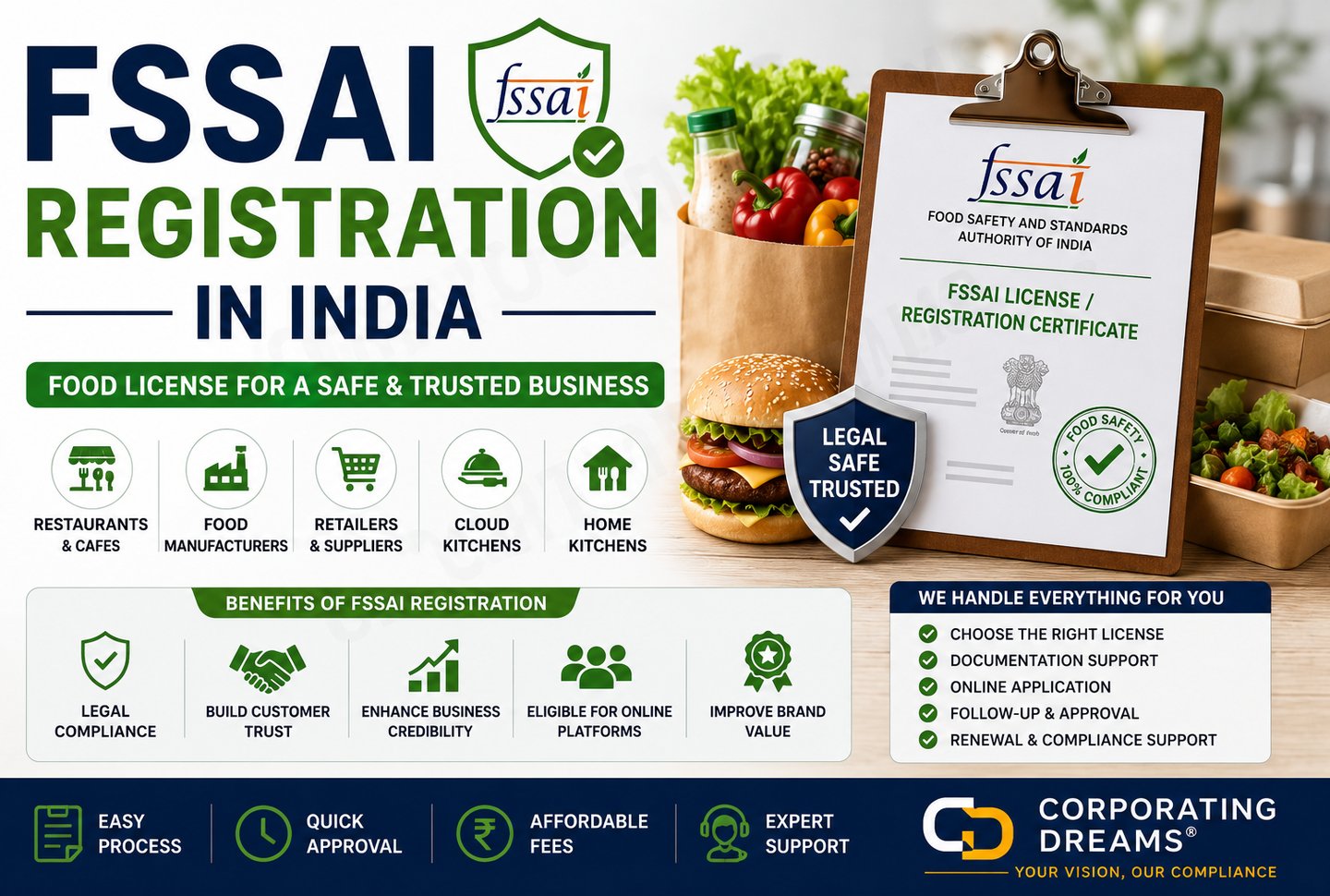
The food industry in India is one of the fastest-growing sectors, encompassing restaurants, cloud kitchens, cafes, food manufacturers, home-based food businesses, food delivery services, bakeries, grocery stores, wholesalers, retailers, importers, exporters, and e-commerce food sellers.
To ensure food safety and maintain hygiene standards, the Government of India mandates Food Business Operators (FBOs) to obtain registration or licensing under the Food Safety and Standards Authority of India (FSSAI).
Whether you are starting a restaurant, launching a food startup, operating a cloud kitchen, selling homemade food products, or manufacturing packaged foods, obtaining FSSAI Registration is a critical legal requirement.
This comprehensive guide explains everything you need to know about FSSAI Registration, including license categories, eligibility, documents, fees, registration process, compliance requirements, and penalties.
What is FSSAI?
The Food Safety and Standards Authority of India (FSSAI) is the regulatory body established under the Food Safety and Standards Act, 2006.
FSSAI is responsible for:
Regulating food businesses
Ensuring food safety standards
Protecting consumer health
Issuing food licenses
Monitoring food quality
Establishing food safety guidelines
Every registered food business receives a unique FSSAI License Number.
Who Needs FSSAI Registration?
Any individual or business involved in food-related activities generally requires FSSAI Registration or License.
Restaurants
Fine Dining Restaurants
Quick Service Restaurants
Cafes
Food Courts
Food Manufacturers
Packaged Food Manufacturers
Food Processing Units
Dairy Units
Food Retailers
Grocery Stores
Supermarkets
Retail Food Shops
Home-Based Food Businesses
Home Bakers
Homemade Food Sellers
Home Kitchens
Cloud Kitchens
Businesses operating exclusively through food delivery platforms.
Food Delivery Partners
Businesses listed on food delivery platforms.
Importers & Exporters
Food businesses engaged in international trade.
Storage & Distribution Units
Warehouses
Cold Storage Facilities
Food Transport Operators
Types of FSSAI Registration
The type of license depends primarily on annual turnover and business operations.
1. Basic FSSAI Registration
Suitable for:
Small food businesses
Home kitchens
Small retailers
Street food vendors
Generally Applicable For
Businesses with annual turnover up to prescribed limits.
Validity
1 to 5 years
2. State FSSAI License
Suitable for:
Medium-sized food businesses
Restaurants
Manufacturers
Distributors
Applicable For
Businesses operating within a single state and crossing basic registration limits.
Validity
1 to 5 years
3. Central FSSAI License
Required for:
Large food businesses
Importers
Exporters
Large manufacturers
Businesses operating across multiple states
Applicable For
Businesses meeting specified criteria under FSSAI regulations.
Validity
1 to 5 years
Benefits of FSSAI Registration
Legal Compliance
Operating without FSSAI registration may attract penalties.
Consumer Trust
Customers prefer purchasing food products from licensed businesses.
Brand Credibility
An FSSAI license enhances business reputation and trustworthiness.
Expansion Opportunities
Required for:
Online Food Delivery Platforms
Modern Retail Chains
Corporate Partnerships
Easier Funding
Investors and lenders generally prefer legally compliant businesses.
Documents Required for FSSAI Registration
Basic Registration
Aadhaar Card
PAN Card
Photograph
Business Address Proof
State & Central License
Additional documents may include:
PAN Card
Identity Proof
Address Proof
Business Registration Certificate
Partnership Deed / Incorporation Certificate
Layout Plan
Food Safety Management Plan
NOC (where applicable)
FSSAI Registration Process
Step 1: Determine License Category
Identify whether your business requires:
Basic Registration
State License
Central License
Step 2: Prepare Documentation
Collect all required business and identity documents.
Step 3: Submit Application
Complete the online application and upload supporting documents.
Step 4: Verification
Authorities review the application and supporting records.
Step 5: Inspection (If Applicable)
Certain businesses may be subject to inspection.
Step 6: License Approval
Upon approval, the FSSAI Registration Certificate or License is issued.
FSSAI Registration for Home Kitchens
Many entrepreneurs start food businesses from home.
Examples:
Home Bakers
Tiffin Services
Homemade Snacks
Catering Services
Home-based food businesses may also require FSSAI Registration depending on their operations.
Benefits include:
Increased customer trust
Better compliance
Easier online sales
Platform listing eligibility
FSSAI Registration for Restaurants
Restaurants are legally required to obtain the appropriate FSSAI license.
Applicable to:
Fine Dining Restaurants
Fast Food Outlets
Cafes
Cloud Kitchens
Restaurant operators must comply with food safety and hygiene standards.
FSSAI Registration for Cloud Kitchens
Cloud kitchens have witnessed rapid growth in India.
Since food is prepared and supplied to customers, FSSAI registration is mandatory.
Benefits include:
Compliance with food delivery platforms
Customer confidence
Business expansion opportunities
FSSAI Renewal
FSSAI licenses are issued for a specified validity period.
Businesses should apply for renewal before expiry.
Failure to renew may result in:
Penalties
Business disruptions
License expiration
Timely renewal helps maintain uninterrupted operations.
FSSAI Compliance Requirements
Registered food businesses should:
✔ Maintain hygiene standards
✔ Follow food safety guidelines
✔ Display FSSAI License Number
✔ Maintain records
✔ Ensure proper food handling procedures
✔ Comply with labeling requirements
Common Mistakes Food Businesses Make
Operating Without FSSAI License
A major compliance violation.
Incorrect License Category
Selecting the wrong registration type may create legal issues.
Delayed Renewal
Can lead to penalties and operational interruptions.
Poor Hygiene Practices
May attract inspections and regulatory action.
Penalties for Non-Compliance
Operating without proper registration or violating food safety regulations may result in:
Financial Penalties
License Suspension
License Cancellation
Business Closure Orders
Legal Proceedings
Food safety compliance should be treated as a business priority.
Frequently Asked Questions
Is FSSAI registration mandatory?
Yes, food businesses generally require registration or licensing under applicable regulations.
Can I sell homemade food without FSSAI?
Food businesses should obtain appropriate registration before commercial operations.
How long does FSSAI registration take?
The processing timeline depends on application type, documentation, and regulatory verification.
Is FSSAI required for cloud kitchens?
Yes, cloud kitchens require FSSAI registration.
Can FSSAI license be renewed?
Yes. Renewal should be completed before license expiry.
Why Choose Corporating Dreams for FSSAI Registration?
Corporating Dreams offers complete food business compliance solutions, including:
FSSAI Registration
State FSSAI License
Central FSSAI License
License Renewal
Food Business Compliance
Restaurant Registration
Cloud Kitchen Registration
Food Startup Compliance
Our experts help businesses obtain approvals quickly while ensuring full regulatory compliance.
Conclusion
FSSAI Registration is a crucial legal requirement for food businesses operating in India. Whether you run a restaurant, cloud kitchen, home bakery, food manufacturing unit, grocery store, or food startup, obtaining the appropriate license helps ensure compliance, customer trust, and business growth.
Proper registration not only protects your business from penalties but also establishes credibility in an increasingly competitive food industry.